
Beyond the Floodwaters: Women’s Health in Gilgit-Baltistan’s Climate Crises
By Ayesha Amin
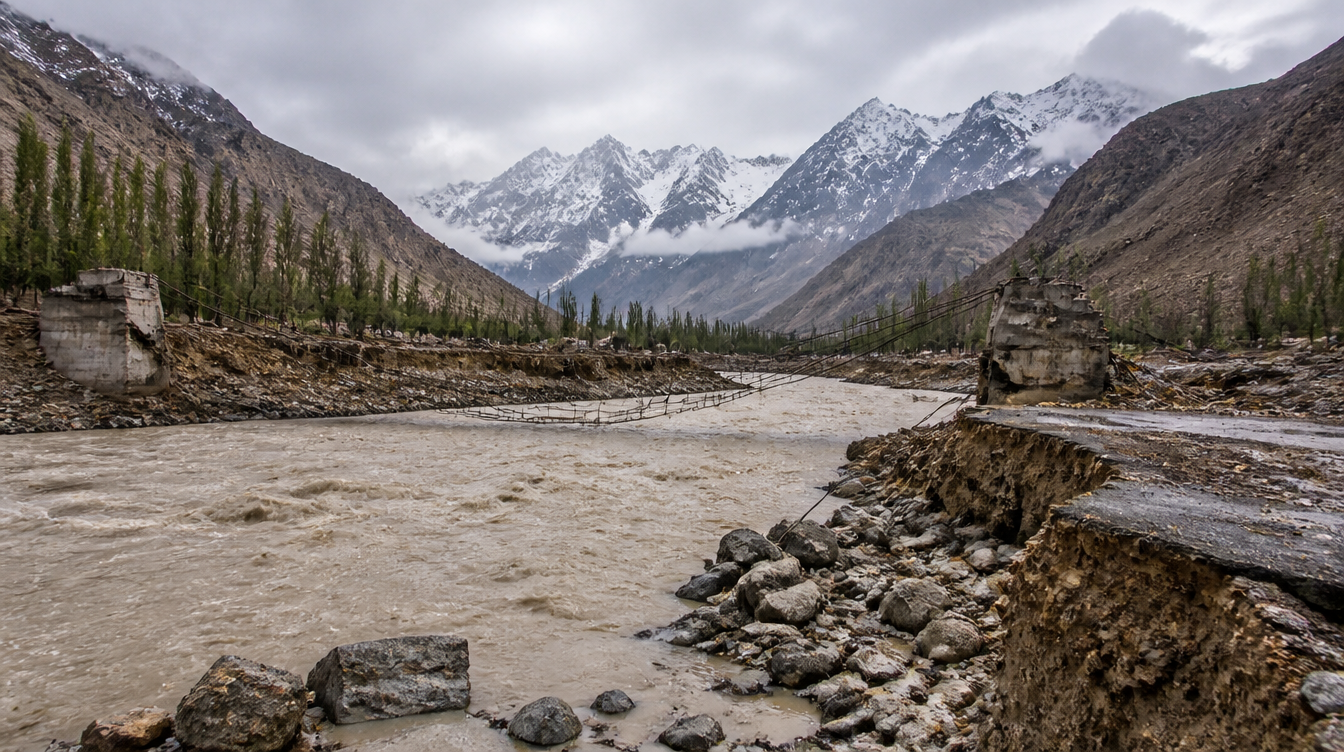
In Gilgit-Baltistan, a washed-away bridge can cut off an entire valley. A damaged road can turn a journey to the nearest hospital into a matter of hours, sometimes days. For communities living in remote mountainous settlements, these disruptions are particularly consequential because access to healthcare, transport and other essential services is often limited even under ordinary circumstances.
The floods of 2025 brought these challenges into sharp focus. Across Gilgit-Baltistan, flash floods, landslides and heavy rainfall damaged homes, roads, bridges and public infrastructure, displacing families and isolating communities. By mid-August, the World Health Organization had reported damage to seven health facilities in the region, while more than 2,900 displaced people were living in six temporary camps. These figures offer some indication of the scale of the emergency, but they tell us much less about what happened to people’s health and wellbeing in the weeks and months that followed.
Disaster assessments understandably document damaged infrastructure, casualties and economic losses. Yet the consequences of a disaster are not always immediately visible or easily measurable. For women, particularly those living in remote communities, the interruption of essential healthcare, difficulties managing menstruation, pregnancy-related concerns and the psychological effects of displacement can continue long after the immediate emergency has passed.
In October 2025, Baithak – Challenging Taboos conducted a qualitative field study across seven locations in Skardu, Ghanche and Ghizer, engaging approximately 288 women and adolescent girls, alongside interviews with health workers, community mobilisers and other local stakeholders. The purpose was to understand how women were navigating the aftermath of the floods, with particular attention to their health, wellbeing and access to essential services.
What emerged from these conversations was a picture of recovery that looked considerably different from the one captured through infrastructure assessments.
When access to healthcare becomes uncertain
Healthcare access in Gilgit-Baltistan is closely tied to geography. Many communities depend on roads connecting smaller settlements to larger towns where health facilities and specialist services are available. When these routes are damaged, even routine medical needs become difficult to address.
During our field visits, women spoke about difficulties accessing healthcare after the floods, including the availability of female healthcare providers and services related to pregnancy and reproductive health. In some communities, these difficulties were not entirely new. The floods had intensified existing barriers, making services that were already difficult to reach even less accessible.
One account documented during the assessment described a woman who had to be carried across a river to seek assistance for childbirth. It is a striking example of what the loss of transport infrastructure can mean in practice. For a pregnant woman requiring medical attention, the question is not simply whether a health facility exists, but whether she can reach it safely and in time.
These experiences point to the importance of looking beyond the physical condition of healthcare facilities. The availability of trained staff, functioning referral systems, transport arrangements and continuity of maternal healthcare are equally important, particularly in areas where geographical isolation can turn relatively manageable health concerns into emergencies.
The health concerns that rarely enter disaster assessments
One of the recurring concerns during our fieldwork was menstrual health. Women and adolescent girls described changes in their menstrual cycles following the floods, including irregular menstruation, prolonged bleeding, pain and weakness. These experiences were reported alongside significant stress, displacement and disruptions to everyday routines.
Such concerns require appropriate medical attention rather than assumptions about their causes. Yet access to consultations, particularly with female healthcare providers, remained difficult for many women.
The assessment also highlighted the practical challenges of managing menstruation in temporary or damaged living arrangements. Limited access to clean water, functioning toilets, private washing spaces and menstrual supplies created additional difficulties for women and girls.
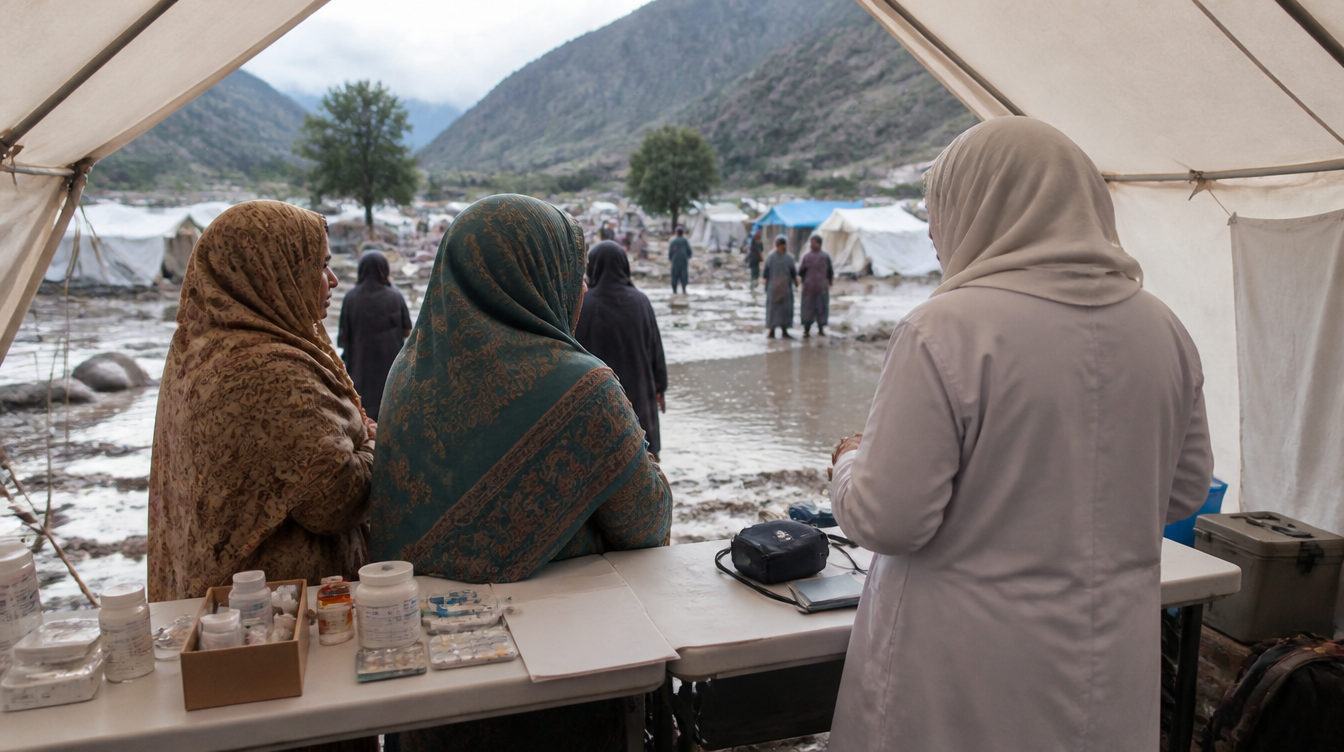
These needs are easily overlooked when relief efforts concentrate on food, shelter and immediate medical emergencies. However, menstrual health and hygiene are not separate from public health. They affect women’s comfort, mobility, participation in daily activities and ability to maintain personal hygiene, especially during displacement.
There is also a social dimension to these challenges. Menstruation and reproductive health remain difficult subjects to discuss openly in many communities. Women may hesitate to raise concerns, particularly when relief distributions, community consultations and local decision-making spaces are predominantly led by men. As a result, needs that are not openly expressed can remain absent from relief planning.
The psychological effects of living through repeated disasters
Another significant finding was the emotional and psychological distress women continued to experience after the floods.
Across several communities, women described anxiety, disturbed sleep and persistent fear, particularly during rainfall. For families who had lost homes, livelihoods or a sense of security, the end of the immediate emergency did not necessarily mean the end of distress.
In mountainous regions where floods, landslides and other hazards remain recurring threats, recovery takes place alongside uncertainty about what might happen next.
Women also spoke about the responsibilities they continued to carry during displacement and recovery. Caring for children and older family members, managing household needs and supporting relatives through distress often fell heavily on women, even as they were dealing with their own losses and anxieties.
These responsibilities are seldom counted in disaster assessments, despite the time, effort and emotional strain they involve.
Mental health support remains an important but insufficiently integrated component of disaster response. While immediate relief is necessary, affected communities also need sustained access to psychosocial support, including services that women can approach comfortably and confidentially.
Women’s experiences must inform recovery planning
The findings also raised questions about whose perspectives shape disaster preparedness and recovery.
Women are often central to how households and communities manage crises. They organise care, make arrangements for food and water, support children and older relatives, and navigate disruptions to everyday life. Yet their participation in formal relief committees and local decision-making processes remains limited.
This disconnect matters because the priorities identified by those making decisions do not always reflect the needs of everyone affected.
For example, a temporary shelter may provide physical protection while lacking adequate toilets or private washing facilities. A health camp may offer general consultations but have limited provision for maternal or menstrual health concerns. Relief supplies may reach households without adequately accounting for the specific needs of adolescent girls, pregnant women or women with disabilities.
These gaps do not necessarily reflect an absence of effort. They point to the need for more inclusive planning, informed by direct consultations with women and local health workers.
Gilgit-Baltistan’s disaster response must also be understood within the region’s wider development challenges. Geographic isolation, uneven healthcare coverage, fragile infrastructure and limited public resources all influence how communities experience emergencies. Strengthening disaster preparedness therefore requires investment in essential services well before the next flood occurs.
Rethinking what recovery means
The experiences documented in Baithak’s field study suggest several areas requiring greater attention.
First, women’s health needs, including menstrual health, maternal healthcare and mental wellbeing, should be integrated into disaster preparedness and response plans from the outset. This requires appropriate supplies, trained female healthcare personnel, accessible referral mechanisms and safe sanitation facilities.
Second, mobile health services and community-based health workers need greater support, particularly in remote settlements where damaged roads can interrupt access for extended periods.
Third, psychosocial support should not end with the immediate relief phase. Communities experiencing repeated disasters require longer-term services that recognise the cumulative effects of displacement, loss and uncertainty.
Finally, women must have meaningful opportunities to participate in local disaster planning and recovery decisions. Their knowledge of household needs, community resources and the challenges of accessing services can help make responses more effective.
The 2025 floods demonstrated once again how quickly essential infrastructure can be disrupted in Gilgit-Baltistan. Rebuilding roads, bridges and homes remains necessary. But recovery must also be assessed through less visible measures: whether a pregnant woman can reach healthcare when she needs it, whether adolescent girls have access to safe sanitation, whether women experiencing distress can seek support, and whether their concerns are reflected in decisions affecting their communities.
These are not secondary considerations. They are part of what determines whether a community has genuinely recovered and how prepared it will be for the next disaster.
This article draws on Baithak’s field study, “Women’s SRHR Through Crisis: A Feminist Field Study in Flood-affected Communities of Gilgit-Baltistan,” conducted in October 2025.
Related on GMN: Climate change in Gilgit-Baltistan: growing risks from melting glaciers · NDMA issues GLOF alert as heatwave accelerates glacier melting